
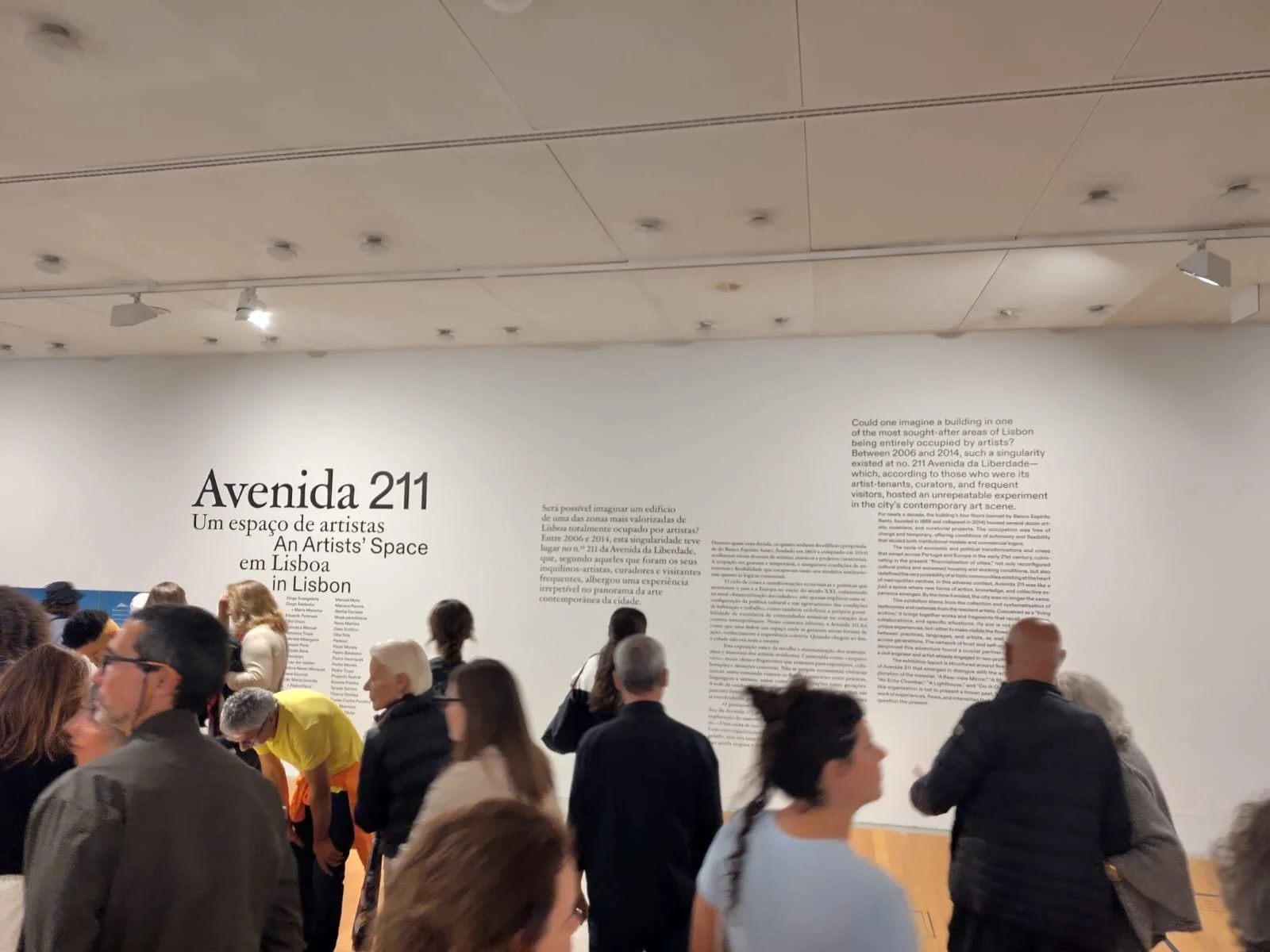
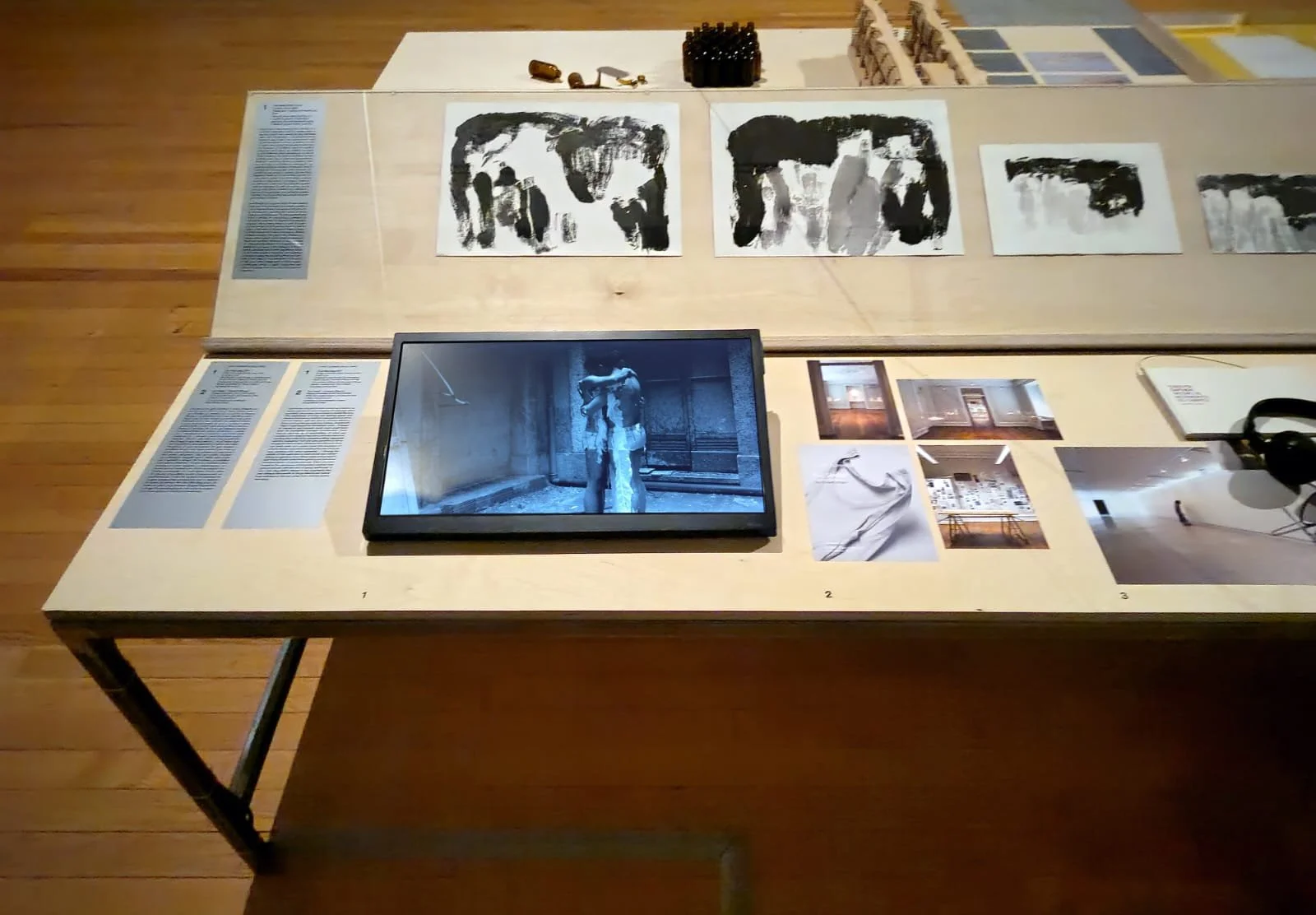
Exhibition View Photo: John Kannenberg
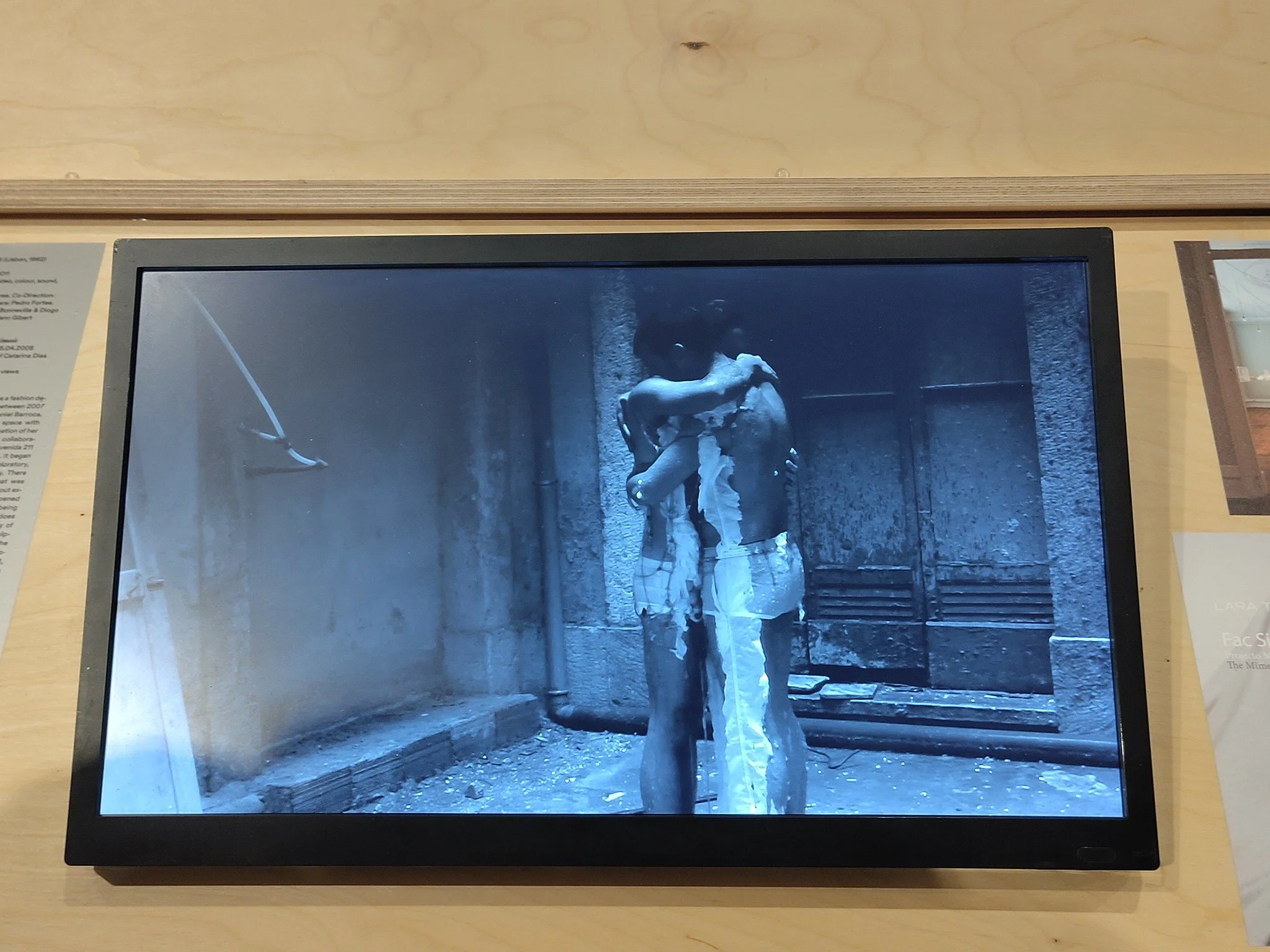
Lara Torres, who at the time worked as a fashion designer, had her studio in Avenida 211 between 2007 and 2012, where she was invited by Daniel Barroca. The experience of living and sharing space with visual artists led to a fruitful cross-pollination of her work in fashion with art, and to several collaborations, such as the one with Ana Santos. Avenida 211 “had a huge impact on my fashion work … it began to transform and become much more exploratory, even its physicality changed considerably. There was an opening up of possibilities, of what was possible, and I already had some curiosity about expanding the limits of my discipline. What happened was the realisation that this was possible by being alongside other artists, thinking that this limit does not really exist, so I could cross this boundary of what is fashion and start invading the area of sculpture, working with other materials ….” Among the results of this openness to new media and collaborations is a group of short films made in Avenida 211, with Pedro Fortes behind the camera, conceived as documentation of performances. Their common thread is the presence of temporary clothes that were produced with the aim of being destroyed. In Two Men Hug (2011), filmed in the courtyard, two men (Miguel Bonneville & Diogo Bento) are locked in an embrace in the rain while their clothes slowly melt away.
Exhibition View Photo: John Kannenberg
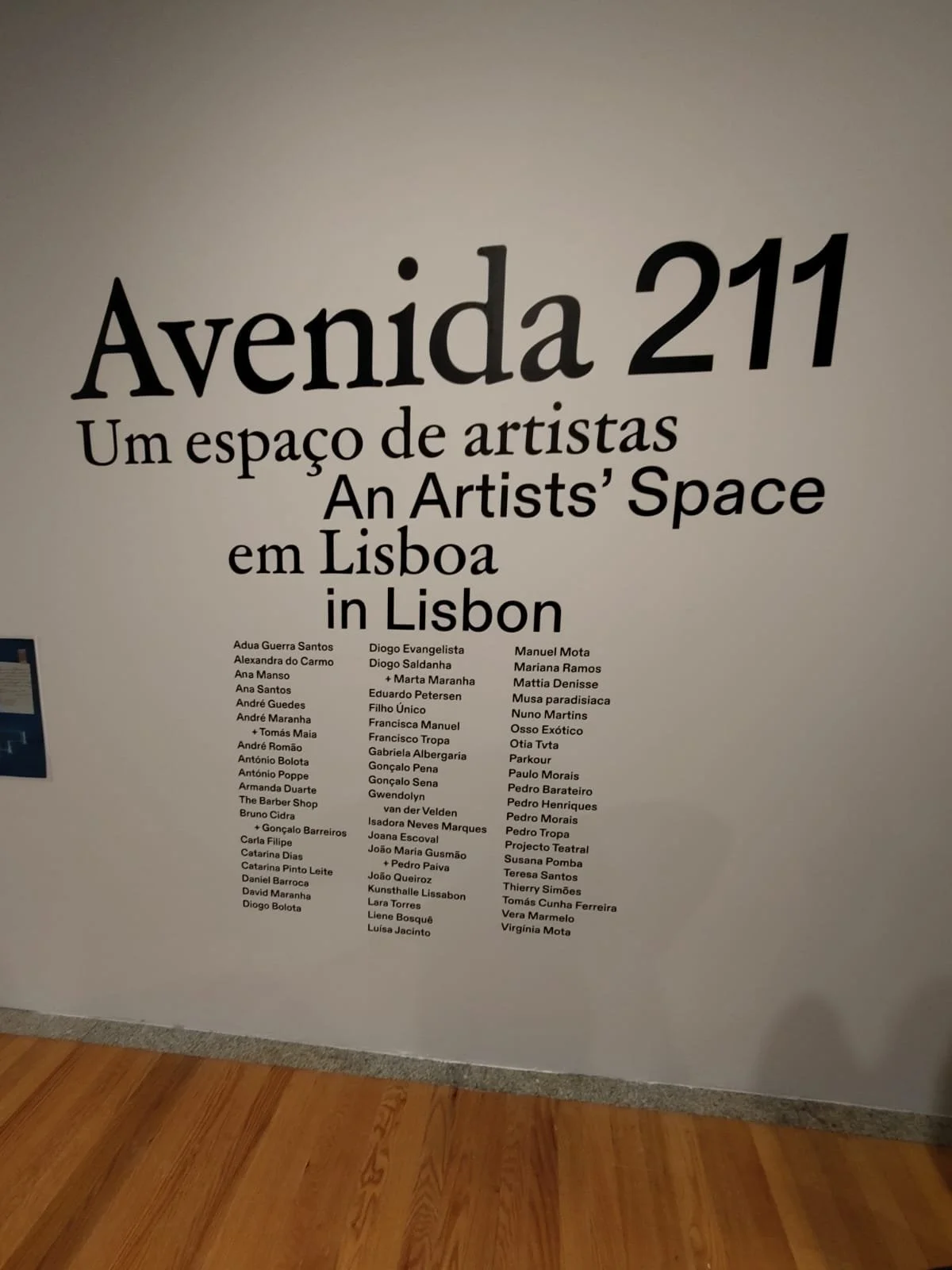
Exhibition View Photo: John Kannenberg
Exhibition View Photo: John Kannenberg
Exhibition View Photo: John Kannenberg
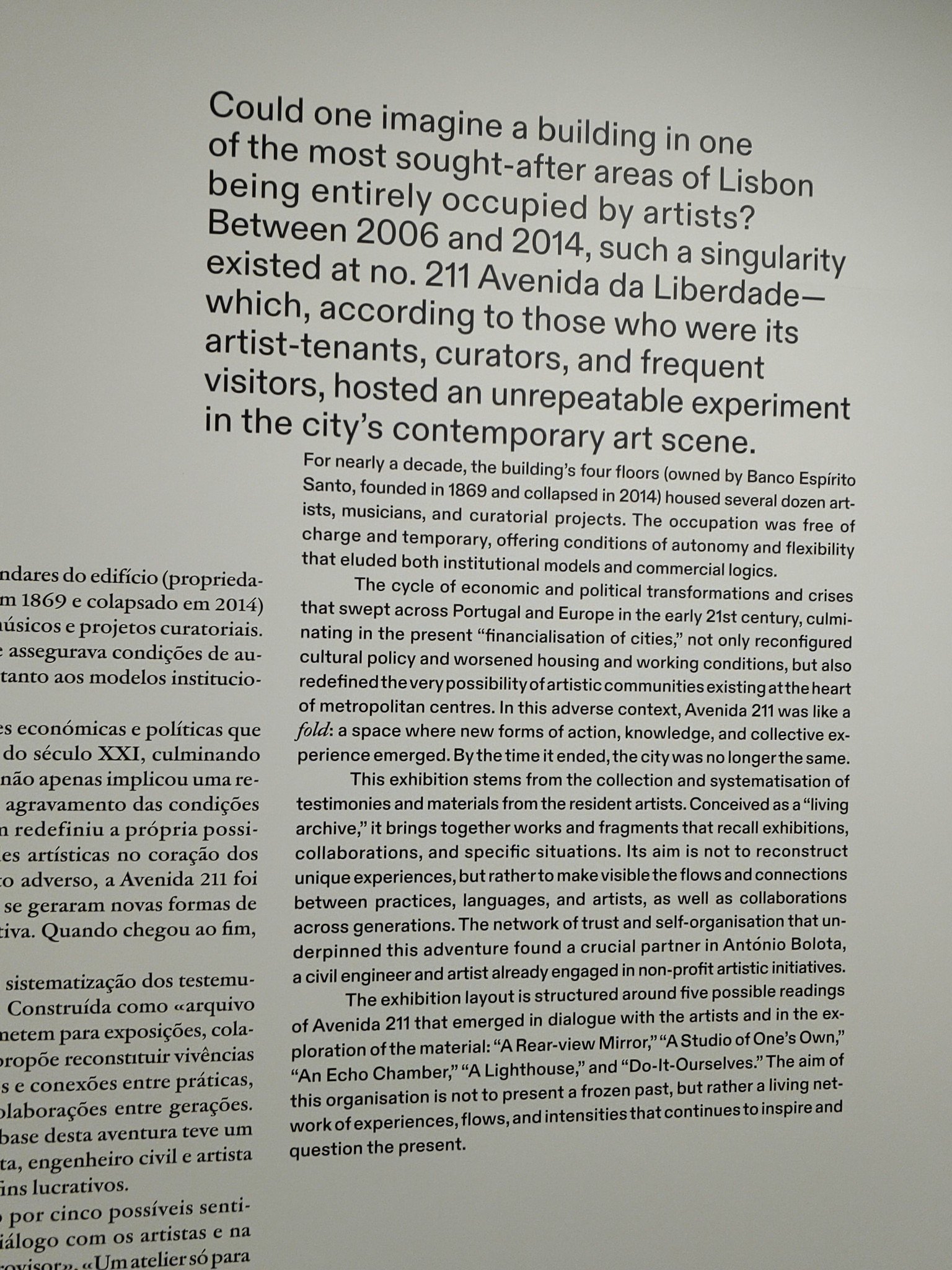
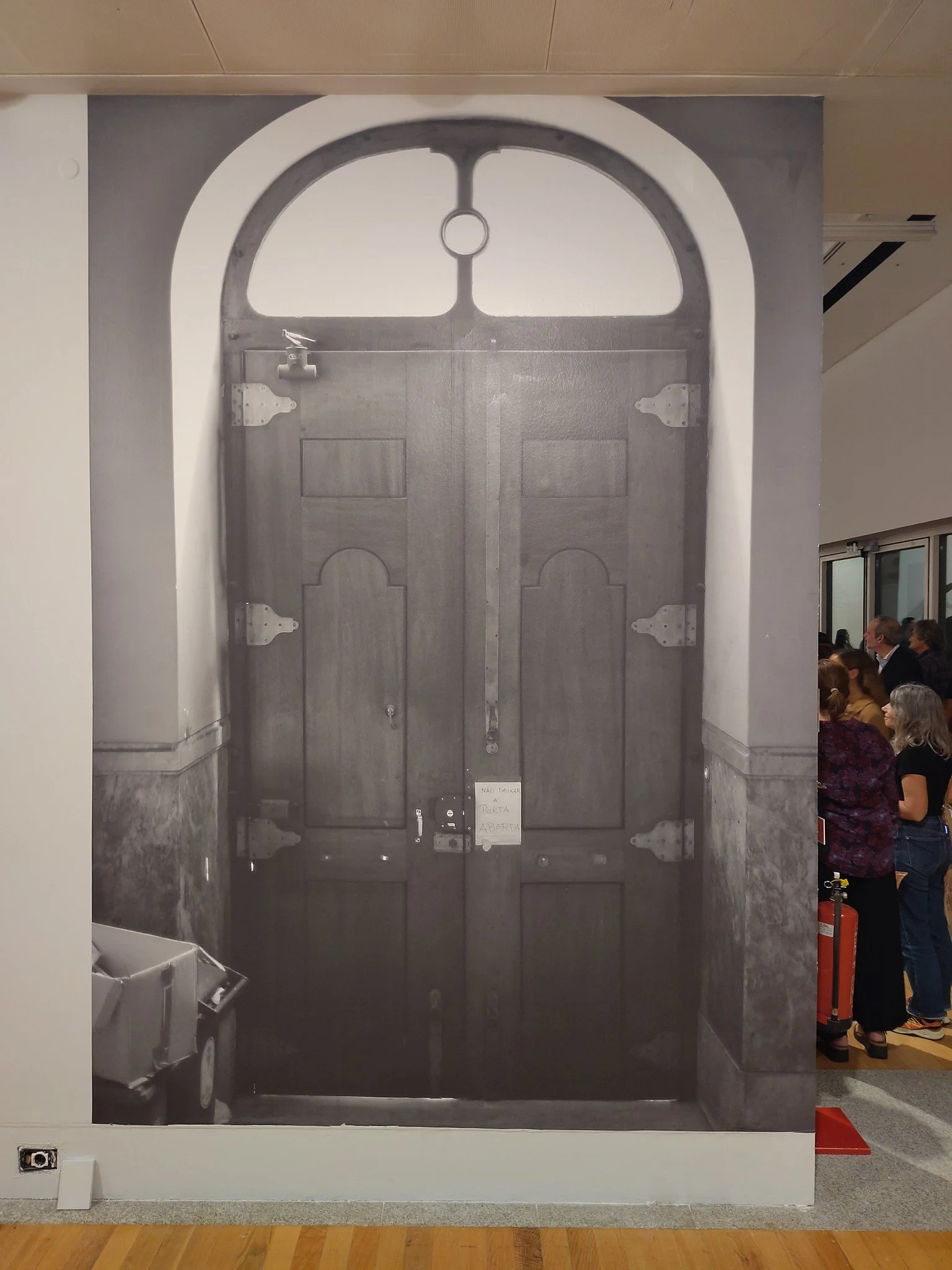
Could one imagine a building in one of the most sought-after areas of Lisbon being entirely occupied by artists? Between 2006 and 2014, such a singularity existed at 211 Avenida da Liberdade—which, according to those who were its artist-tenants, curators, and frequent visitors, was home to an unrepeatable experiment in the city’s contemporary art scene.
For nearly a decade, the building’s four floors (owned by Banco Espírito Santo, founded in 1869 and collapsed in 2014) housed several dozen artists, musicians, and curatorial projects. Occupation was free and temporary, providing a degree of autonomy and flexibility beyond institutional models and commercial logics.
The story of this vital and vulnerable occupation sheds light on the Portuguese cultural context but also on the cycle of economic and political transformations and crises that swept across Portugal and Europe at the start of the 21st century. The global financial crisis of 2008–2009, along with the Troika established to implement economic assistance between 2011 and 2014, had a profound impact on the art scene, imposing severe cuts that reshaped cultural policy and further worsened housing and working conditions. In the same period, economic hardship also fuelled the rise of social movements, sparking protests that passed along Avenida da Liberdade in Lisbon.
Over the course of a process that culminated in the present “financialisation of cities,” the very possibility of artistic communities existing at the heart of metropolitan centres was redefined. In this adverse context, Avenida 211 was like a fold: a space where new forms of action, knowledge, and collective experience emerged. By the time it ended, the city was no longer the same.
This exhibition stems from the collection and systematisation of testimonies and materials from the resident artists. Conceived as a “living archive,” it brings together works and fragments that recall exhibitions, collaborations, and specific situations. Its aim is not to reconstruct unique experiences, but rather to make visible the flows and connections between practices, languages, and artists, as well as collaborations across generations. The network of trust and self-organisation that underpinned this adventure found a crucial partner in António Bolota, a civil engineer and artist already engaged in non-profit artistic initiatives.
At the same time, this research revealed that the experience of Avenida 211 took place in a period of transition, even from a technological perspective: from paper to digital. Whilst little material was preserved on paper, it was equally difficult to recover part of the digital archive, stored on old hard drives. This, too, attests to the spontaneous, authentic nature of the experience, free from any intention of self-celebration.
The exhibition layout is structured around five possible readings of Avenida 211 that emerged in dialogue with the artists and in the exploration of the material: “A Rear-View Mirror,” “A Studio of One’s Own,” “An Echo Chamber,” “A Lighthouse,” and “Do-It-Ourselves.” The aim of this organisation is not to present a frozen past, but rather a living network of experiences, flows, and intensities that continues to inspire and question the present.
The research was carried out by Giorgia Casara and Sara De Chiara, whilst the exhibition was curated by Nuria Enguita and Marta Mestre. Architecture by André Maranha, and design by Sofia Gonçalves. The exhibition was produced by the MAC/CCB team.